UNGA 81 Field Report Diaspora Protest Mobilization in New York City
A field-evidence account of diaspora protest activity observed during UN General Assembly 81 in New York City, September 2026, drawn from contemporaneous photographs, video, and handwritten field notes. This report is the underlying case study for ARAC's OODA-Risk field-analysis framework.
This report consolidates observations from field material collected during UN General Assembly 81 protest activity in New York City. It is an evidentiary field record, not a representative survey of national public opinion or of any diaspora community as a whole.
Three evidentiary layers are kept distinct throughout: direct observation from video, direct observation from still photography, and contemporaneous analyst field notes written by hand at the time. Statements printed on protest signs are treated as protesters’ claims or political rhetoric unless independently verified elsewhere.
Audio transcription remains incomplete. Video material was reviewed visually and cross-checked against still imagery and notebook entries, but exact spoken dialogue is not reproduced unless directly legible from visible signage or notes.
Source Note
This report publishes, in web form, the field-evidence package cited as reference [1] in ARAC’s companion framework, Covering & Monitoring High-Risk Political Events. The two documents should be read together.
Section 1
Field Observations at a Glance
Guinea was the most operationally significant case. The material shows organized mobilization, counter-presence, crowd compression, police reinforcement, and later stabilization.
Dispersal did not end the sequence. Field notes record a physical confrontation, NYPD intervention, escort of protesters from the area, and a re-formation of related activity near the Waldorf Astoria, identified in the notes as the Guinea delegation’s location.
Liberian material shows internal debate, not a unified front. Politically engaged intra-diaspora disagreement remained primarily discursive rather than coercive.
Grievance structures varied widely. Haiti, Bangladesh, North Korea, and a Philippines-led Pax Silica coalition each projected a different frame, from sovereignty and minority rights to human rights and resource control.
Digital amplification was constant. Participants across every case repeatedly filmed speakers, police, opposing demonstrators, and crowd activity on mobile phones.
Crowd size alone was a weak risk indicator. Cross-group proximity, spatial compression, available disengagement space, police posture, and counter-mobilization carried more analytic weight.
Section 2
Operating Environment
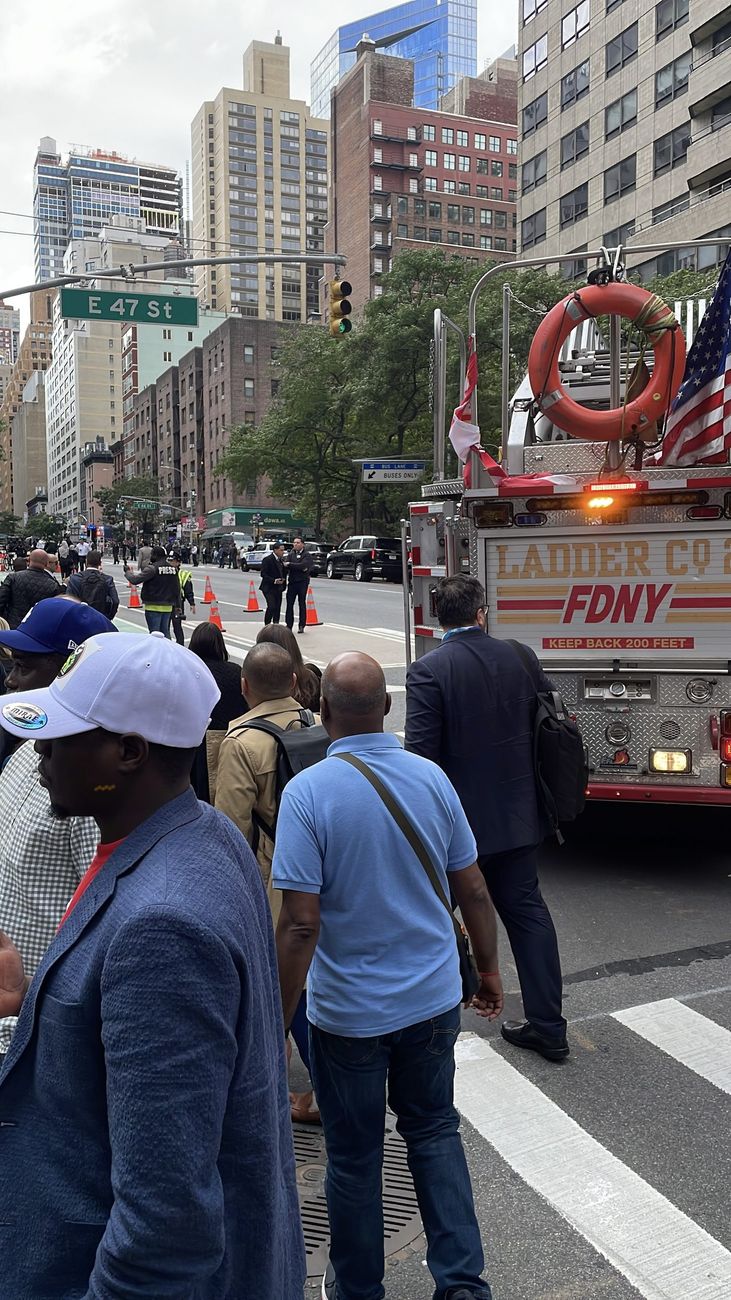
UNGA 81 week placed a rotating set of diaspora and advocacy groups within a few blocks of United Nations headquarters and several nearby hotels used by visiting delegations. NYPD maintained a visible perimeter presence throughout, with FDNY apparatus staged along adjacent avenues as part of the broader security posture for the week.
This is the setting in which each protest case below unfolded: a constrained Midtown street grid, metal barricading, a rotating police presence calibrated to crowd behavior, and dense pedestrian and vehicle traffic that narrowed available disengagement space.
FDNY Ladder Company apparatus staged along East 47th Street, part of the broader security posture for UNGA week.
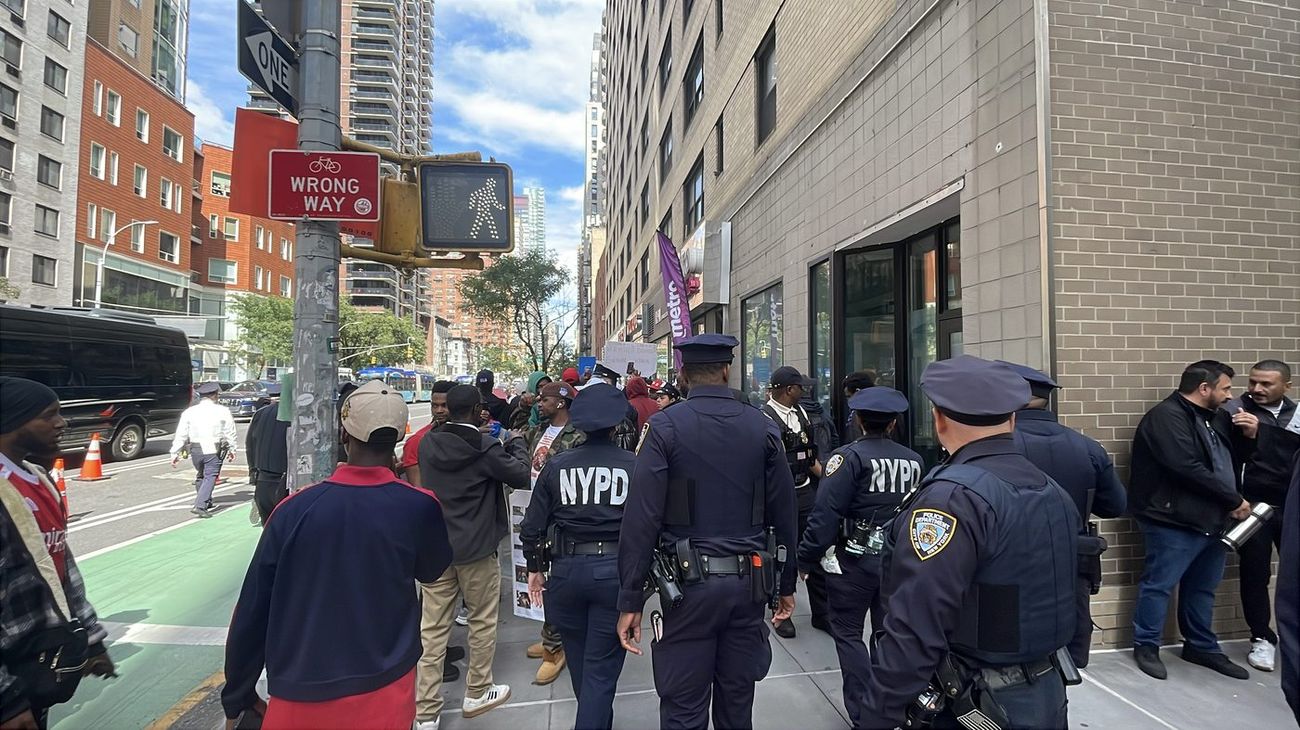
NYPD officers holding a sidewalk position adjacent to a protest gathering, one of several units rotated through the area over the course of the week.
Field highlight compilation assembled from clips recorded across the observed protest activity during UNGA 81 week.
Section 3
Guinea: Mobilization, Convergence & Containment
Case Summary
Actor / Network
FNDC-affiliated organizers and independent Guinean diaspora participants
Grievance
Opposition to the CNRD military transition; detentions and reported disappearances
Target
Guinea’s transitional authorities, named individually on signage
Legitimacy Frame
Regime legitimacy and human rights
Digital Amplification
High; extensive mobile-phone recording throughout
Cross-Group Proximity
Escalated from adjacent to confrontational
Police Posture
Shifted from observation to direct separation and movement control
Risk Trajectory
Rising through convergence, declining after reinforcement
The Guinea sequence was the most sustained and operationally significant case in the collected material. Video and photographic evidence show recurring red apparel and Guinean colors, coordinated chanting, repeated signage, and extensive mobile-phone recording consistent with organized mobilization.
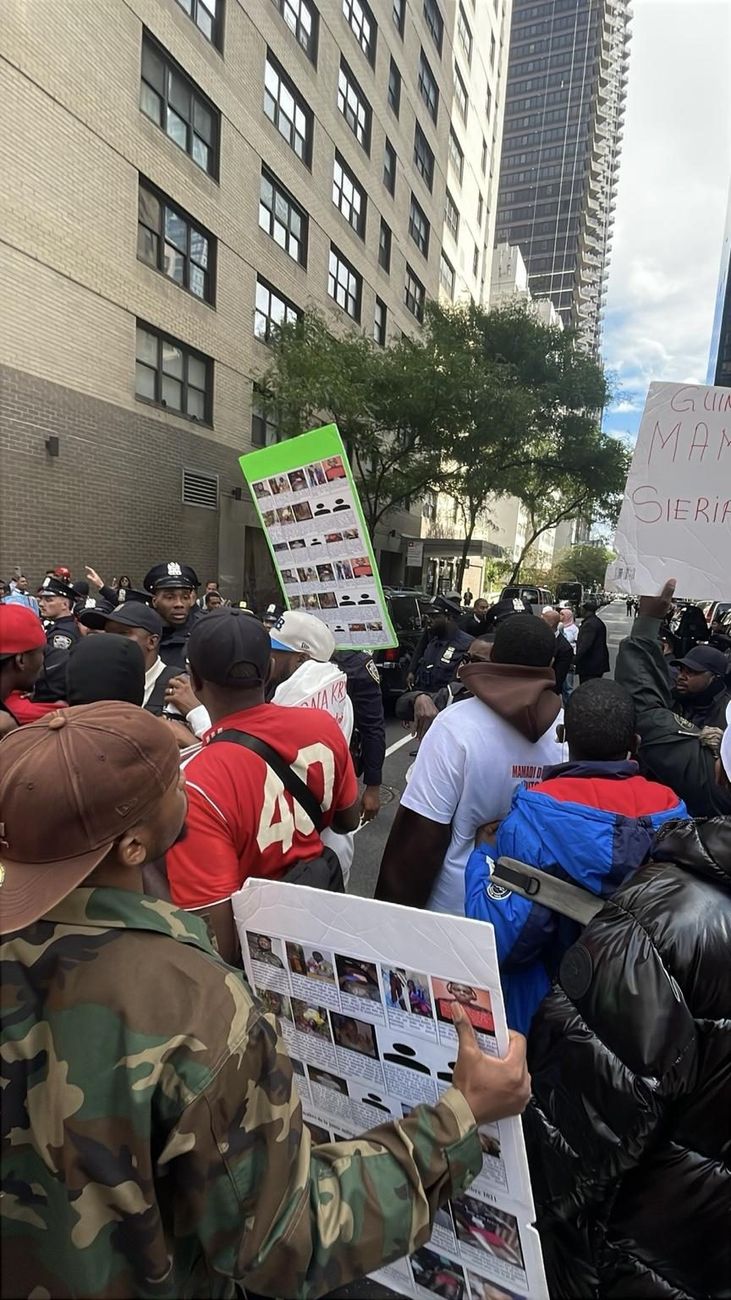
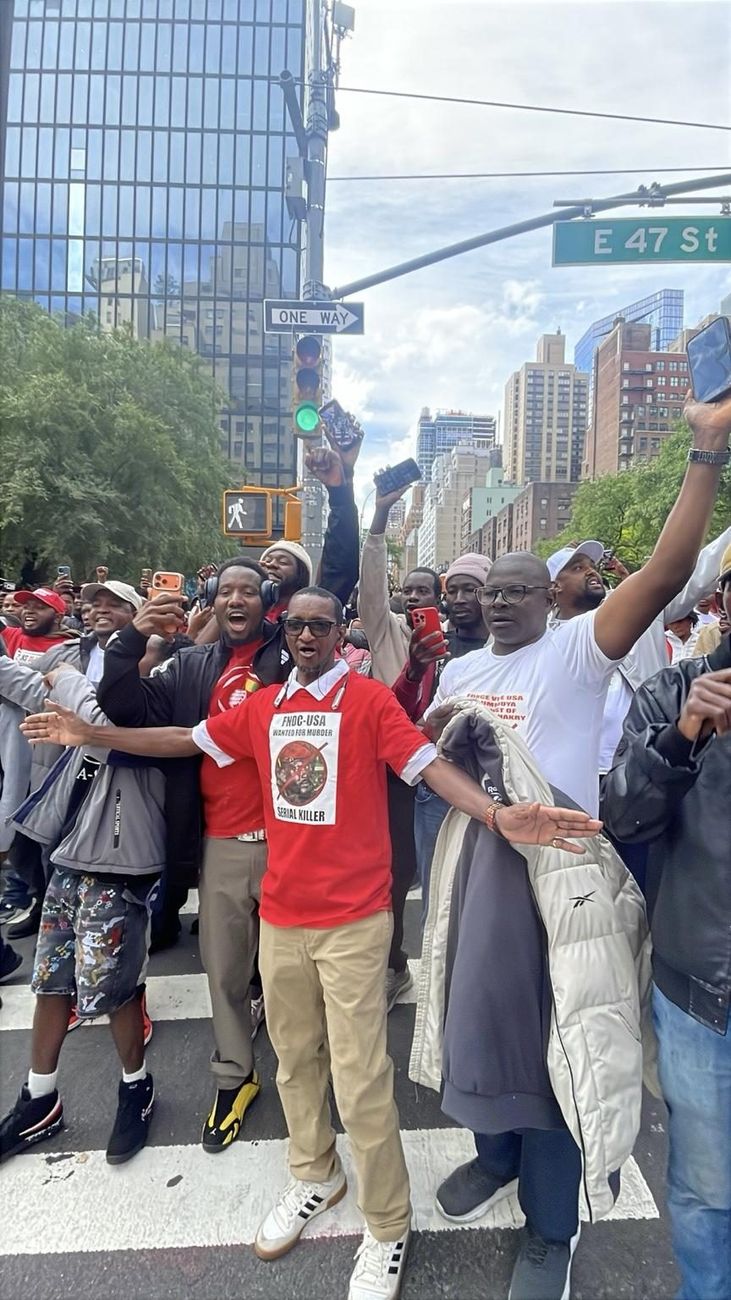
Early material shows high protest intensity without clear sustained physical violence. Later footage shows reduced separation distance and increasing crowd compression along sidewalks, storefronts, vehicles, and the roadway edge. NYPD posture visibly shifted from general presence toward direct separation and movement control, with officers inserted into the interaction space between protesters and counter-presence.
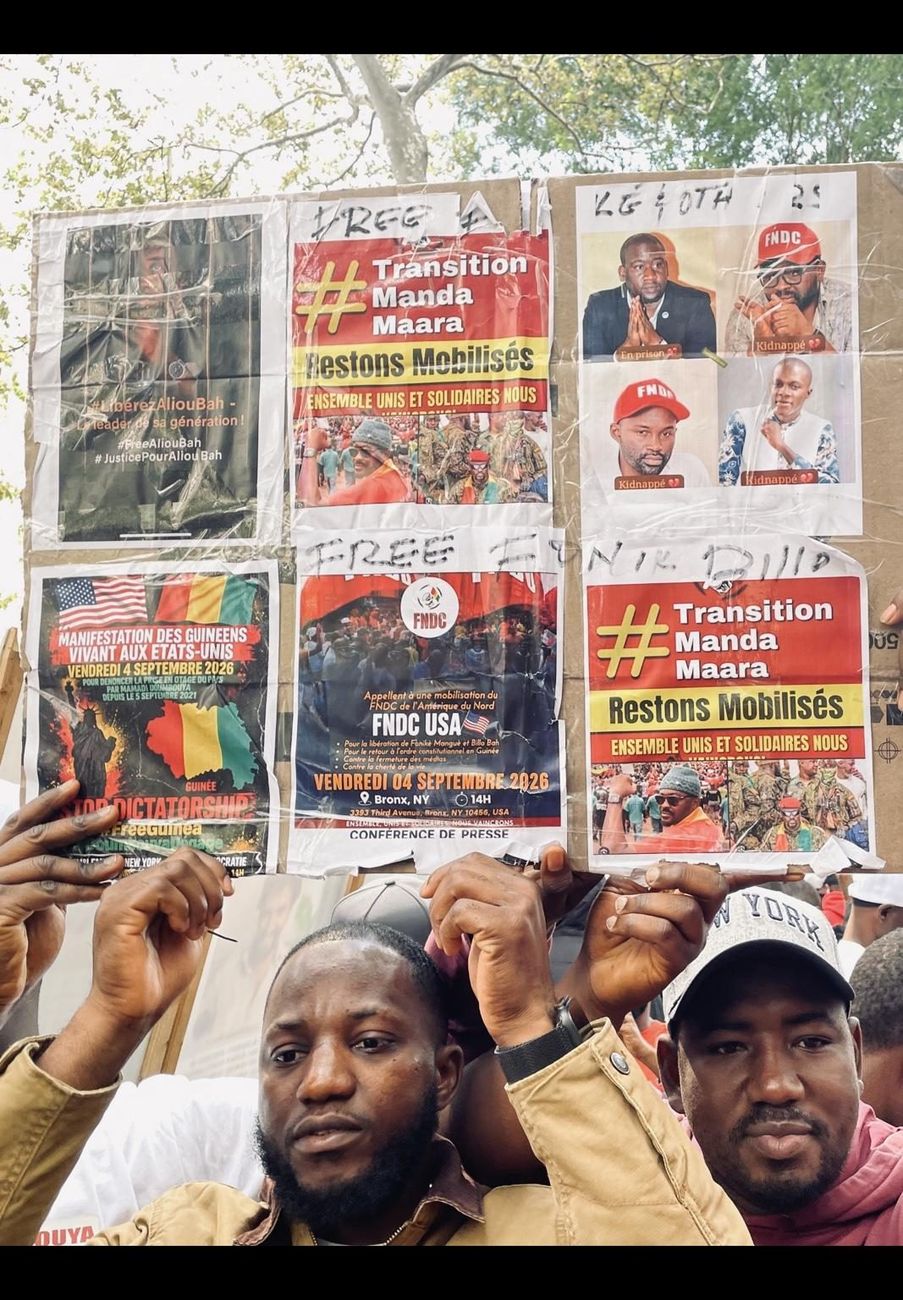
Signage combined FNDC-associated branding with individually handmade boards. A recurring multi-panel grievance board functioned as a portable archive, combining prior mobilization notices, the names and photographs of individuals reported detained or missing, and messaging opposing the transitional government. Personalized anti-government rhetoric was repeatedly visible, including severe accusations directed at Guinea’s transitional president, Mamadi Doumbouya. These are recorded here as protesters’ claims, not as independently verified findings.
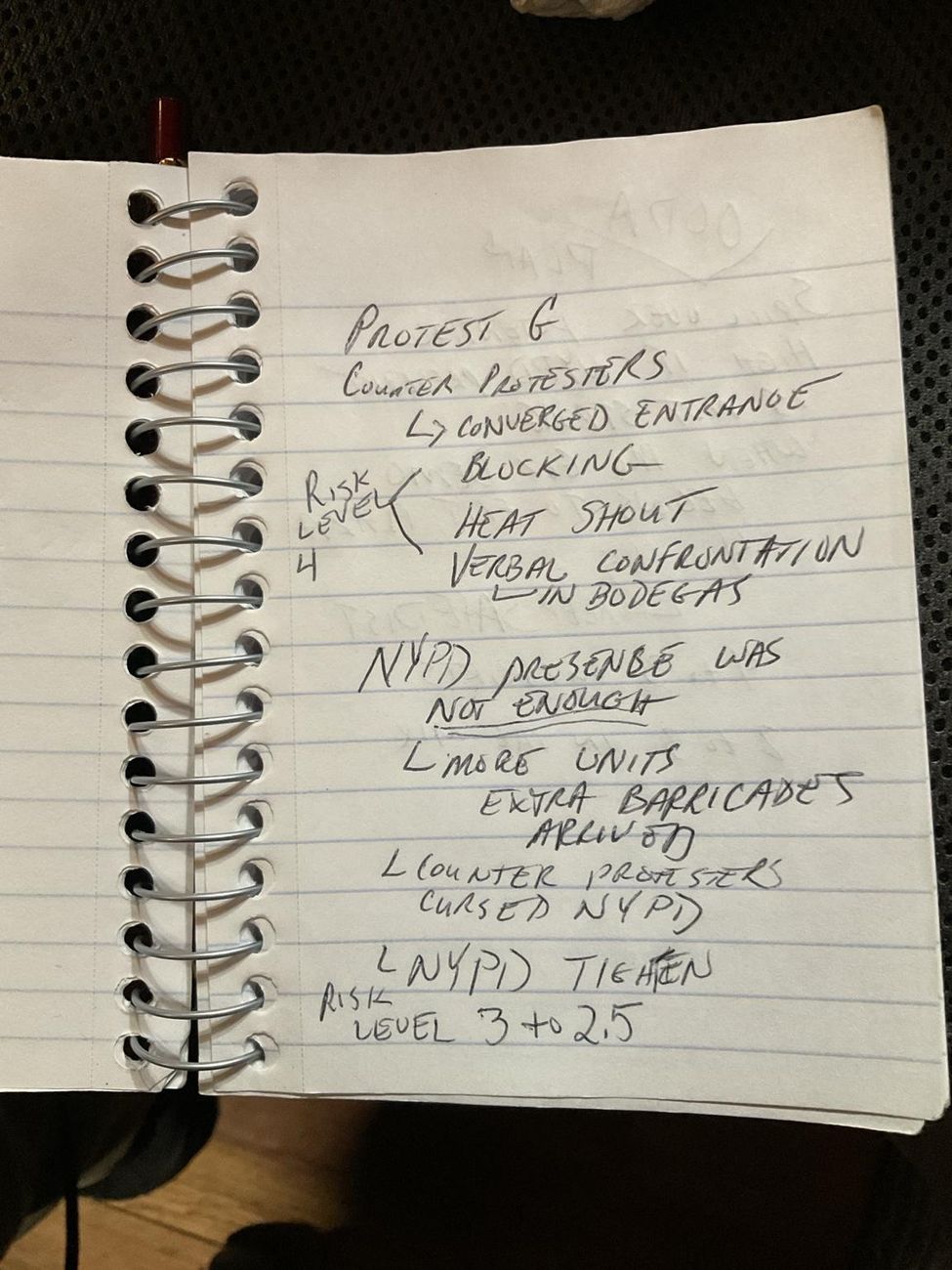
Contemporaneous field notes describe a later, distinct phase: protest and counter-protest convergence near an entrance, physical blocking, and heated verbal confrontation spilling into nearby storefronts, with a field-assessed risk level of approximately 4 out of 5. NYPD presence at that point was judged insufficient in the moment; additional units and barricades arrived, counter-protesters reportedly directed hostility at officers, and the police posture visibly tightened. The assessed risk level was recorded as declining to approximately 3 to 2.5 following reinforcement.
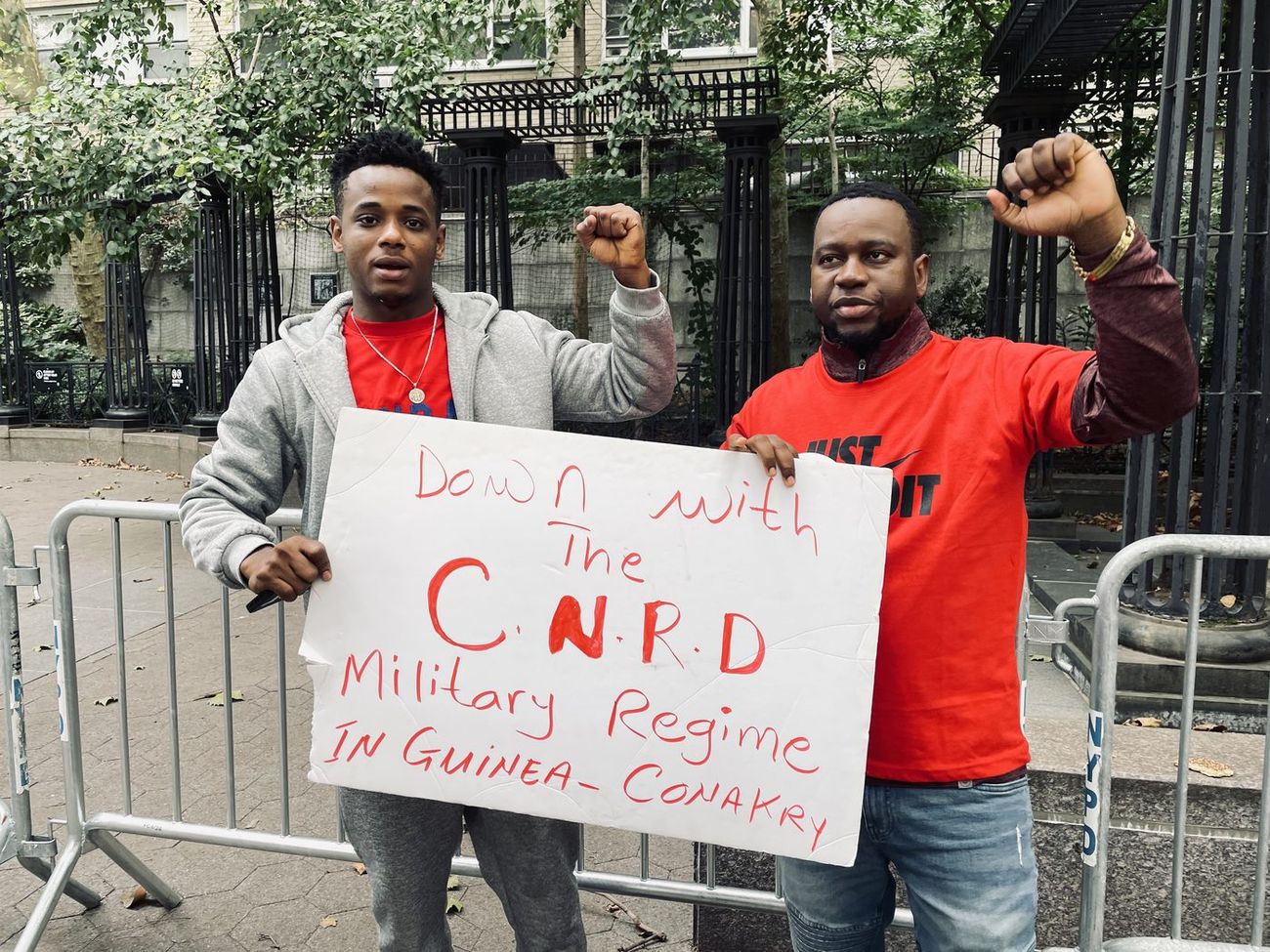
“Down with the CNRD Military Regime in Guinea-Conakry.” Protesters’ sign, treated as a political claim.
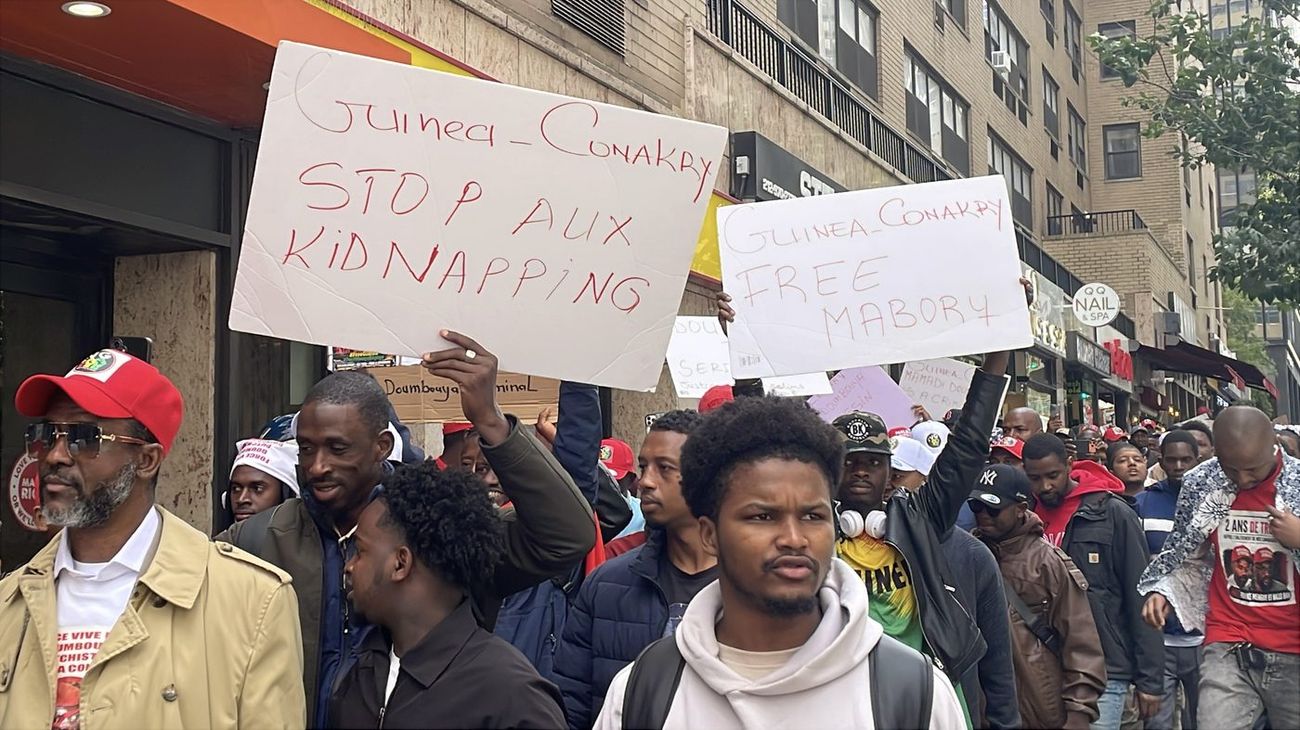
“Stop aux kidnapping” and “Free Mabory,” carried during a march segment of the Guinea sequence.
A recurring, multi-panel FNDC-affiliated grievance board naming individuals reported detained or missing.
Crowd compression along East 47th Street, including apparel naming a Guinean transitional official.
NYPD officers positioned inside the protest interaction zone, alongside the grievance board.
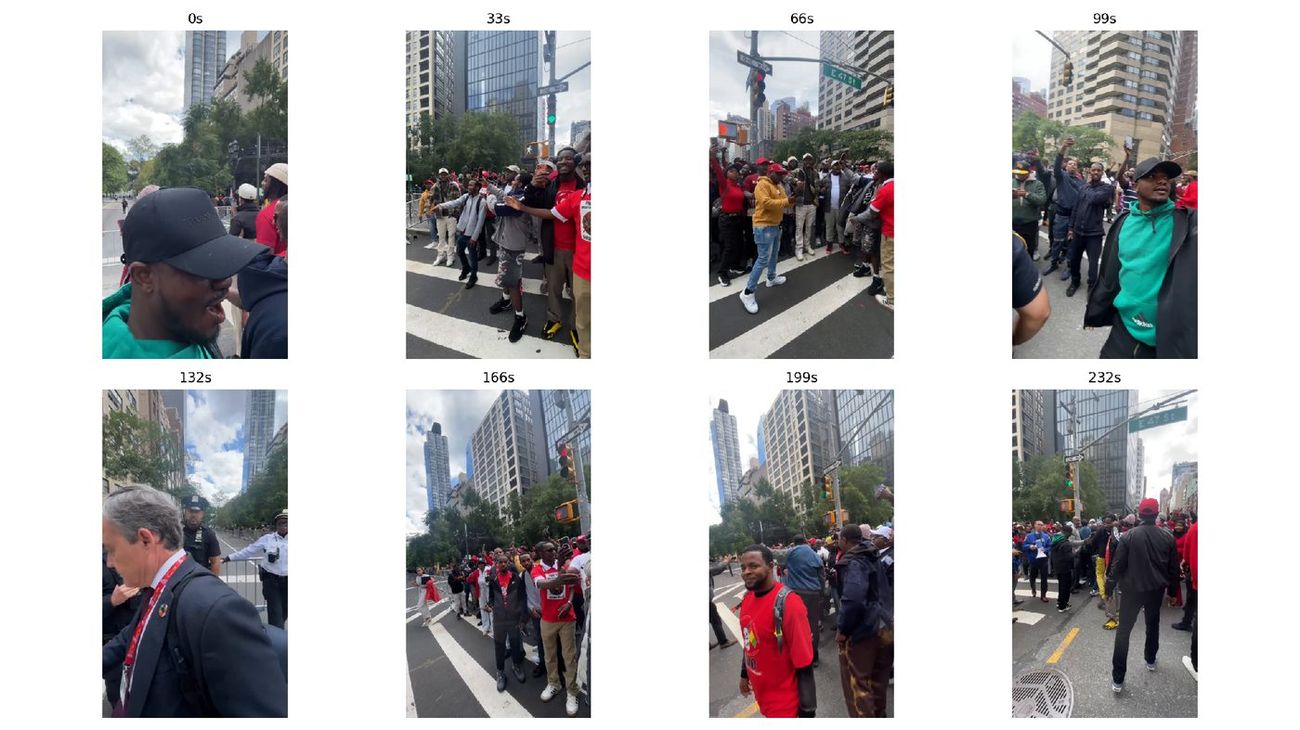
Video Contact Sheet Mobilization narrowing into crowd compression near a UN-credentialed pedestrian, drawn from field video.
Field clip, Guinea sequence.
Field clip, Guinea sequence, alternate angle.
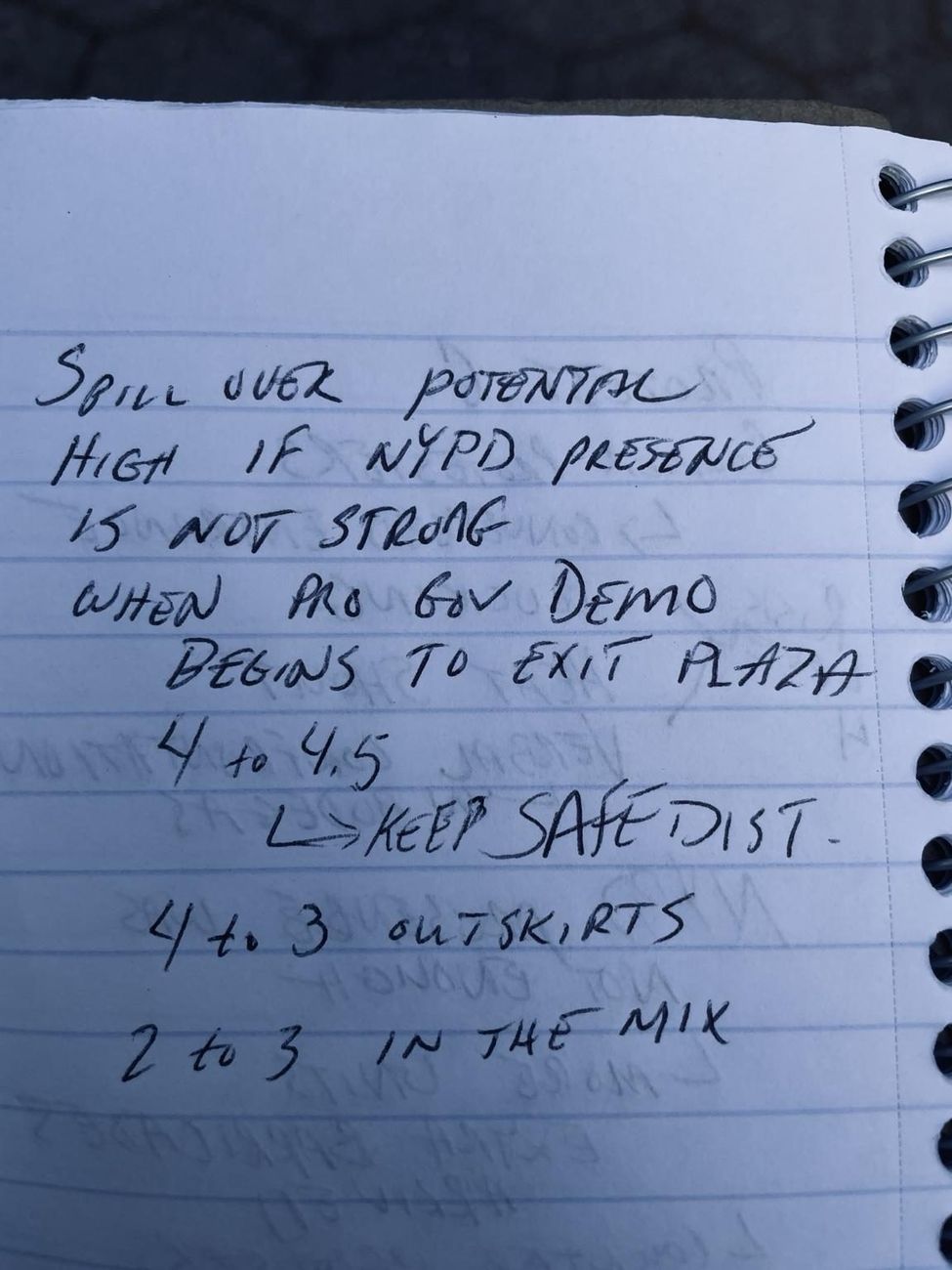
Field Note Exhibit Contemporaneous note: spillover potential judged high if NYPD presence weakened as a pro-government demonstration began to exit the plaza; risk assessed at 4 to 4.5, with instruction to keep safe distance.
Field Note Exhibit Contemporaneous note: counter-protesters converged on an entrance, blocking access; heated verbal confrontation followed; risk assessed at 4, declining to 3–2.5 after NYPD reinforcement with additional units and barricades.
Section 4
Liberia: Political Debate & Intra-Diaspora Contestation
Case Summary
Actor / Network
Liberian diaspora participants, not organized under a single group
Grievance
Governance, accountability, leadership performance, public security
Legitimacy Frame
Performance legitimacy, not wholesale rejection of the political system
Cross-Group Proximity
Intermixed; internal to the Liberian diaspora
Police Posture
Observation only; no separation line recorded
Risk Trajectory
Stable, low to moderate
Liberian material differs sharply from the Guinea sequence in structure. Video shows participants in prolonged, animated, face-to-face political debate. The interaction is conversational and responsive rather than coercive, and the footage does not show a comparable police separation line, crowd rush, or barricade pressure.
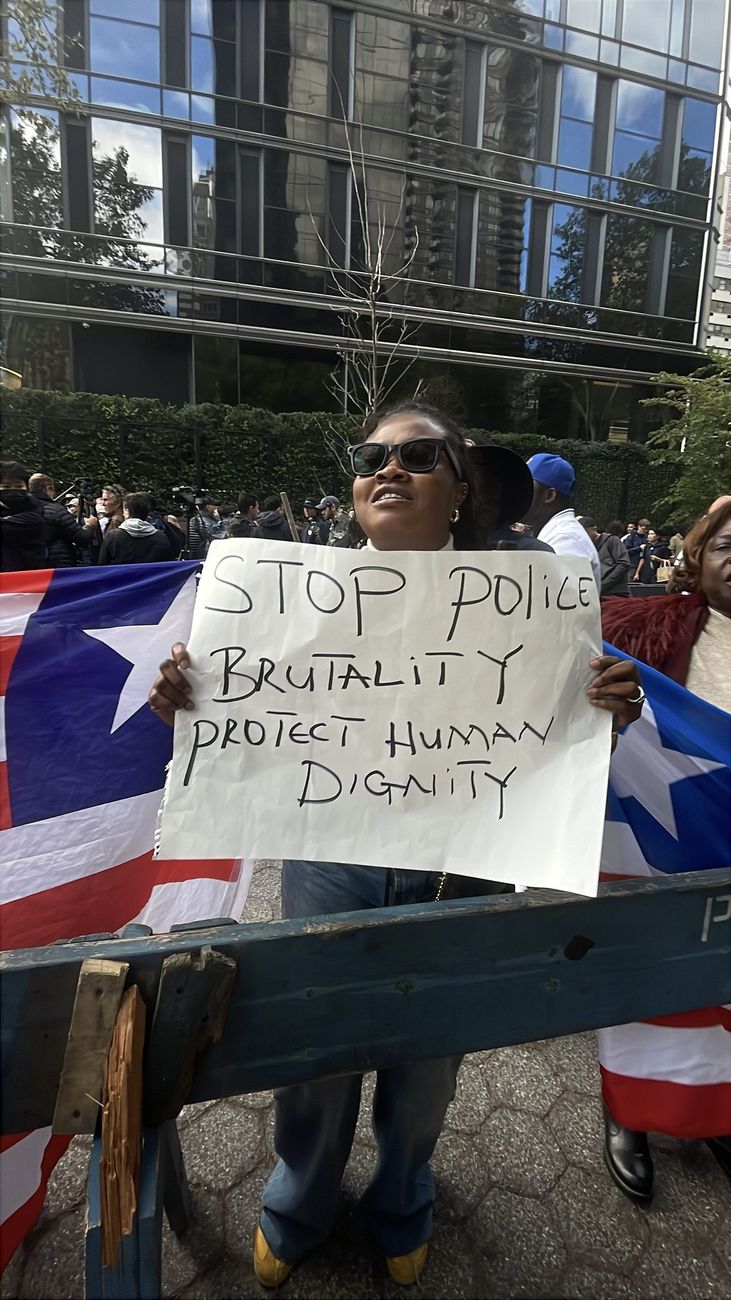
The material’s principal analytic value is evidence of internal political diversity within the Liberian diaspora rather than a single, unified protest position. Photographic material separately documents visible grievance claims emphasizing governance, accountability, leadership performance, dignity, and public-security concerns, including a sign reading “Stop Police Brutality, Protect Human Dignity” displayed alongside the Liberian flag. Read together, the video and photographic layers show that Liberians in attendance actively contested how their own shared grievances should be interpreted, rather than converging on one narrative about the political system’s legitimacy.
“Stop Police Brutality, Protect Human Dignity,” displayed with the Liberian flag.
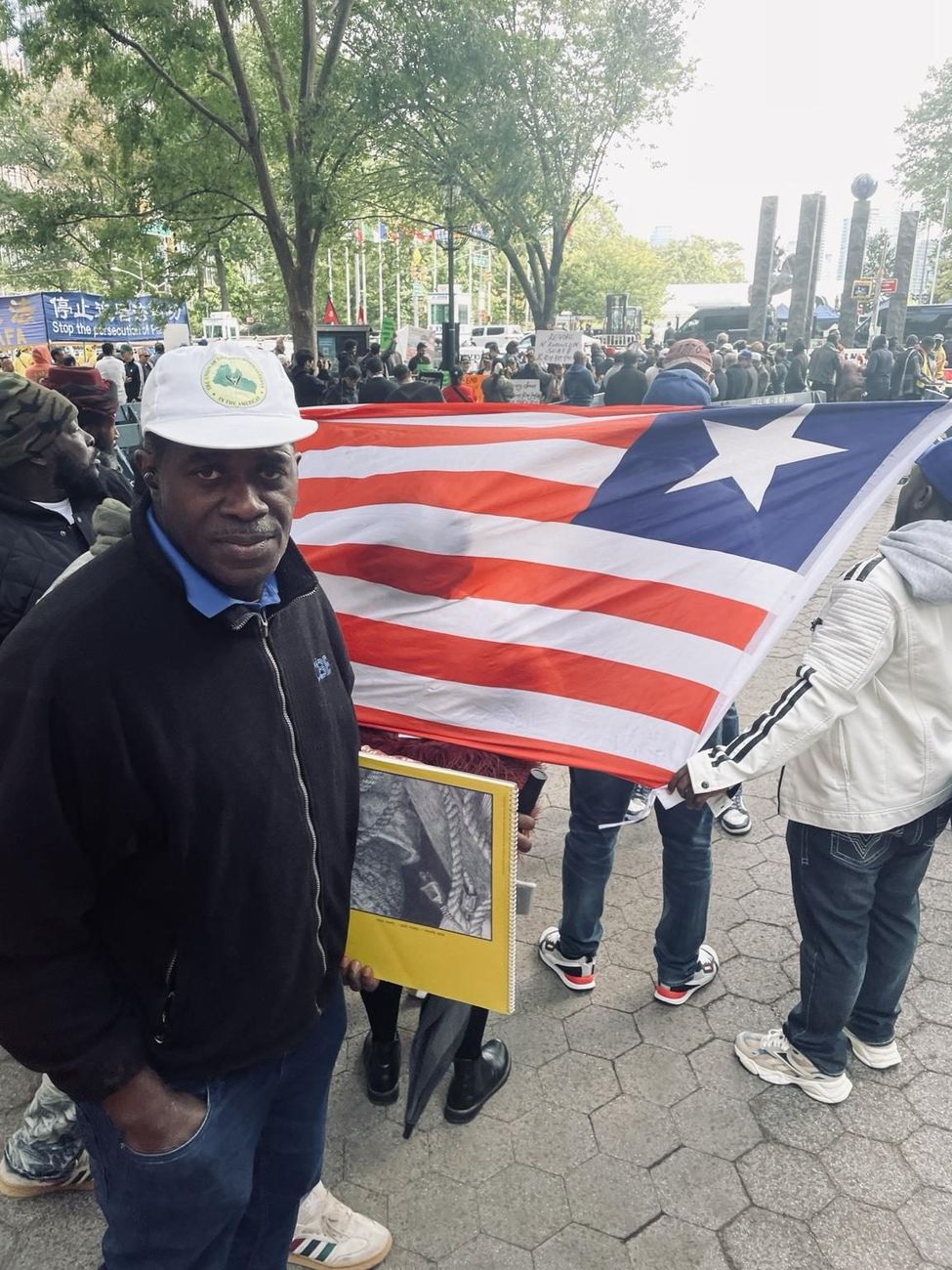
A Liberian diaspora participant with the national flag near the UN Headquarters plaza.
Field clip, Liberia diaspora debate.
Video Contact Sheet Prolonged, face-to-face political debate among Liberian participants (IMG_9800).
Section 5
Haiti, Bangladesh, North Korea & the Pax Silica Coalition
Four additional protest currents were documented in less depth but illustrate the range of grievance structures present at UNGA 81.
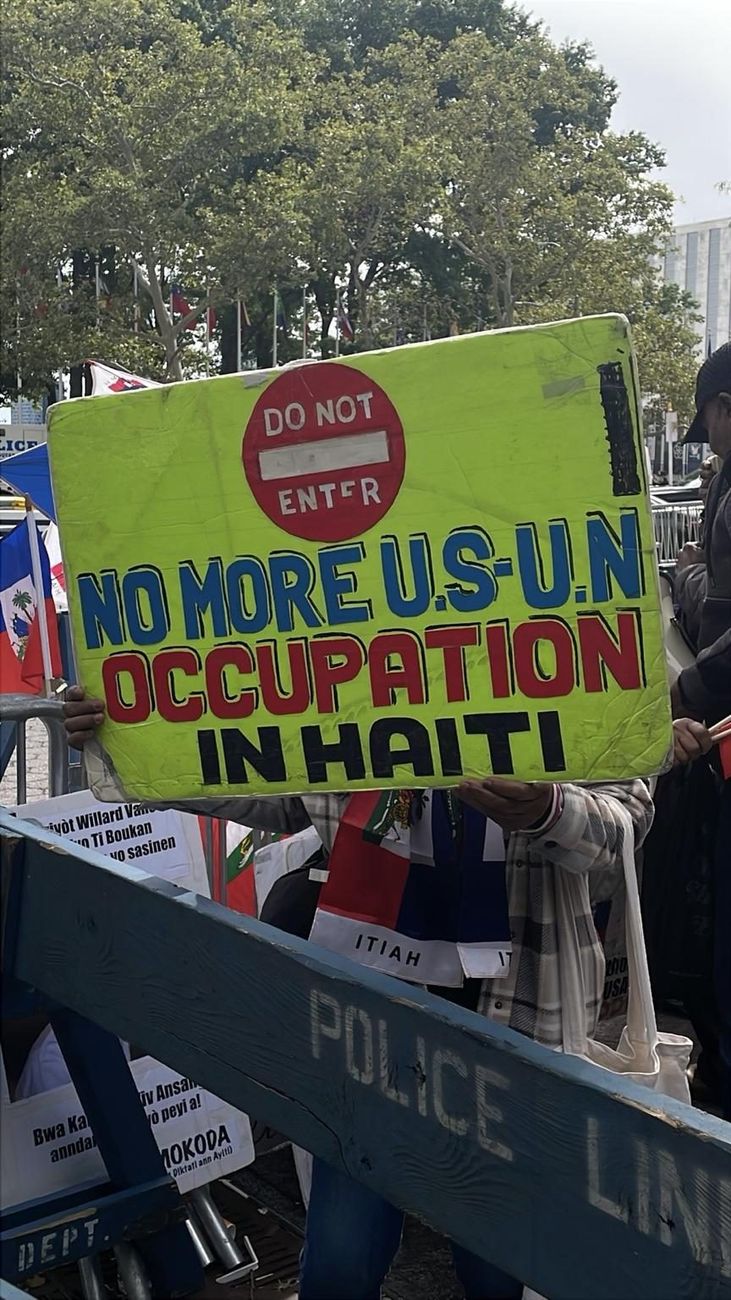
Haiti. Material used a sovereignty frame, including explicit opposition to continued U.S. and UN involvement and criticism of Haitian political leadership. One sign read: “Do Not Enter: No More U.S.-U.N. Occupation in Haiti.”
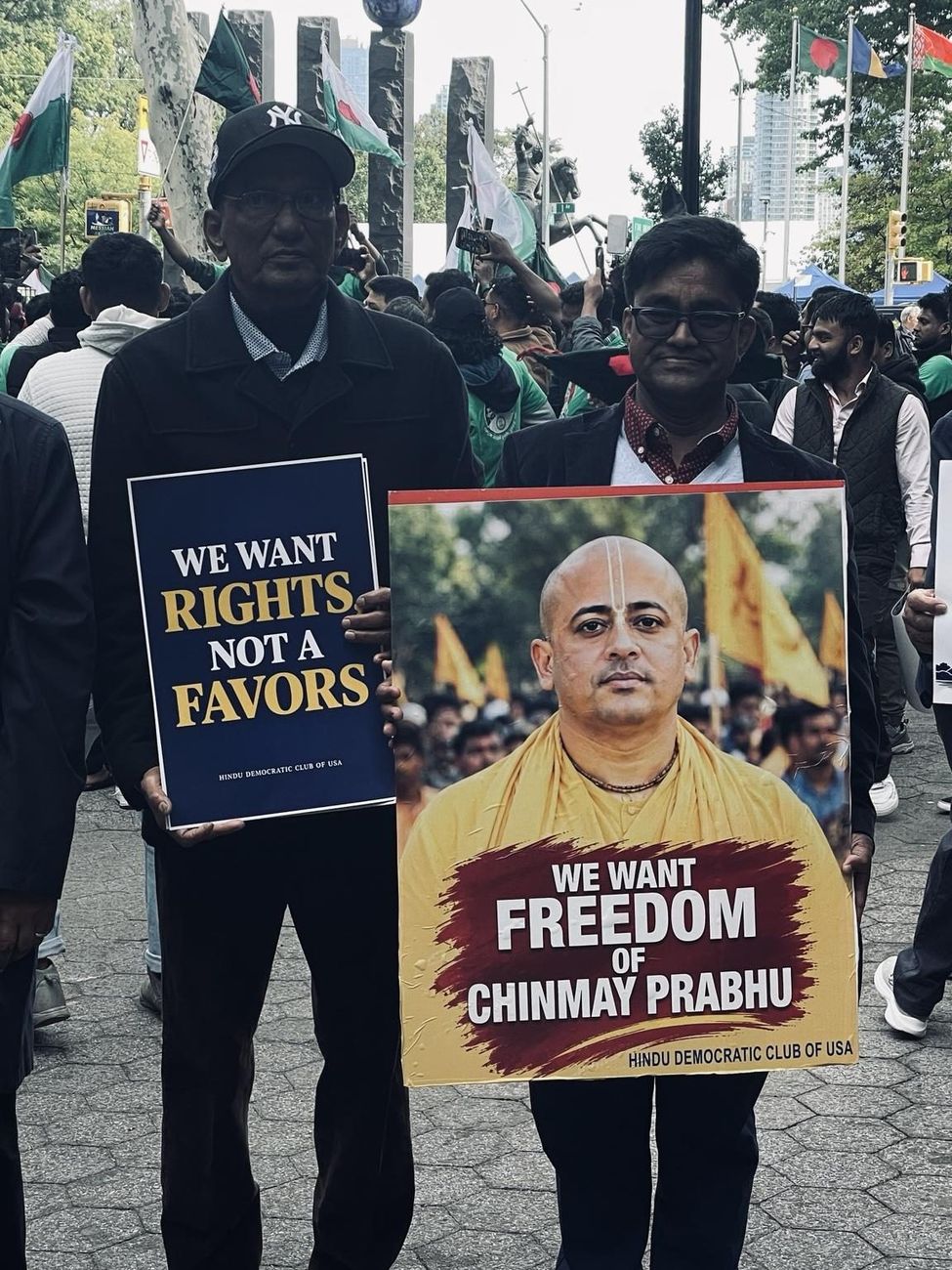
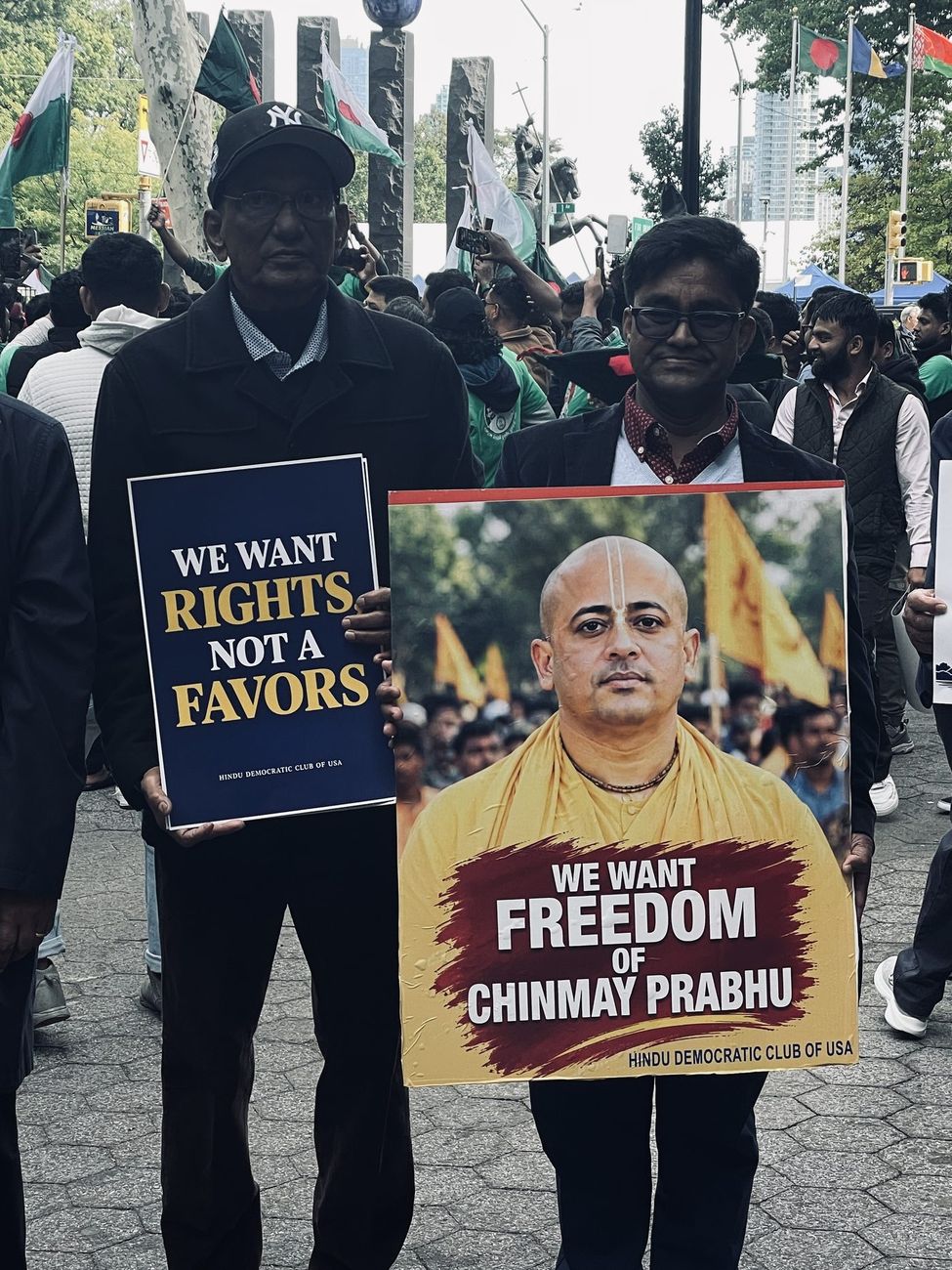
Bangladesh. Material contained more than one political current. Hindu Democratic Club of USA signage called for minority rights (“We Want Rights, Not Favors”) and the release of a detained religious figure identified on the sign as Chinmay Prabhu, carried alongside a much larger crowd of Bangladeshi flags and independent chants.
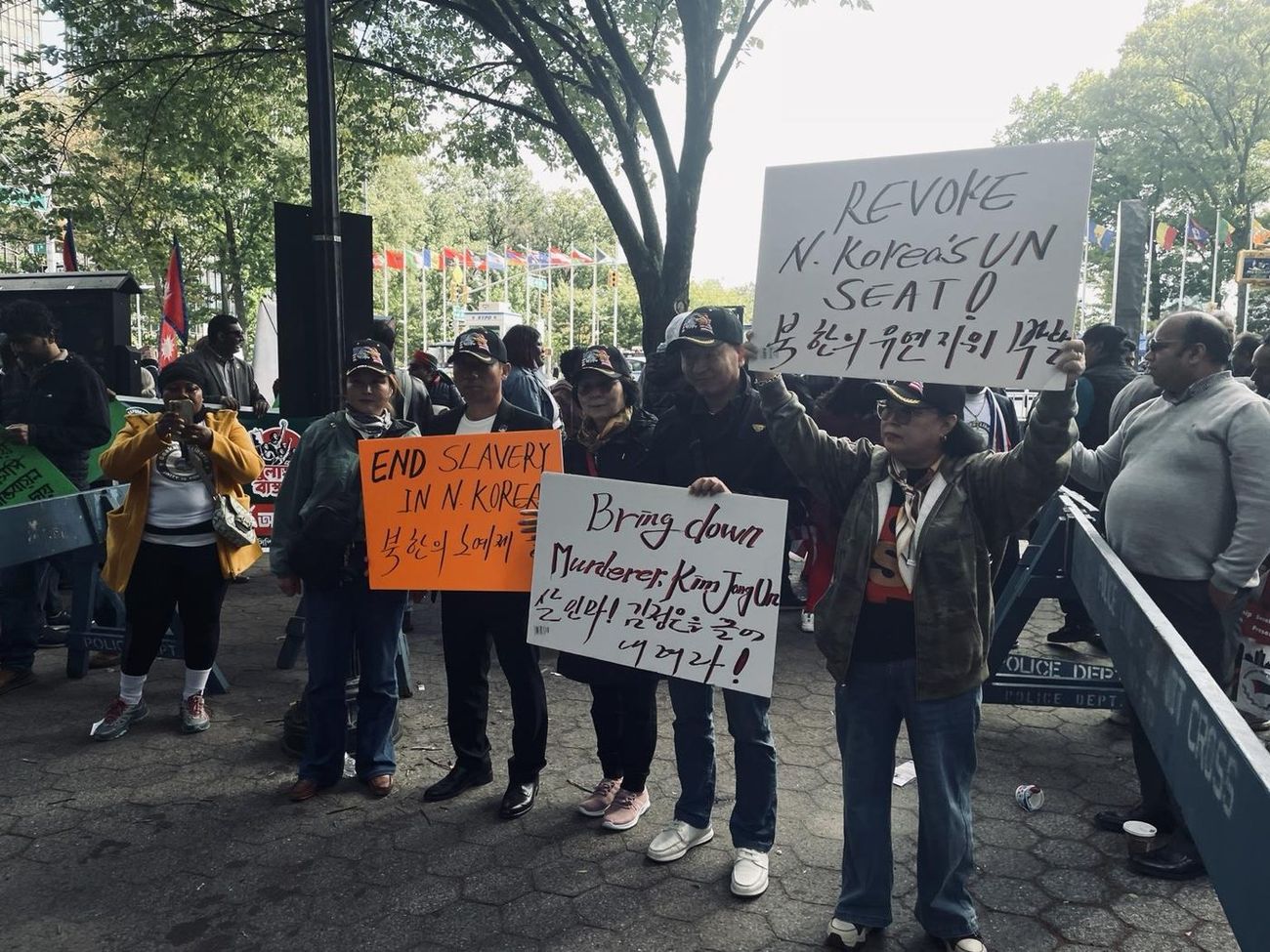
North Korea. Protesters used specific human-rights and institutional demands directed at the DPRK government and its standing at the UN, including signs reading “End Slavery in North Korea,” “Bring Down Murderer Kim Jong Un,” and “Revoke North Korea’s UN Seat.”
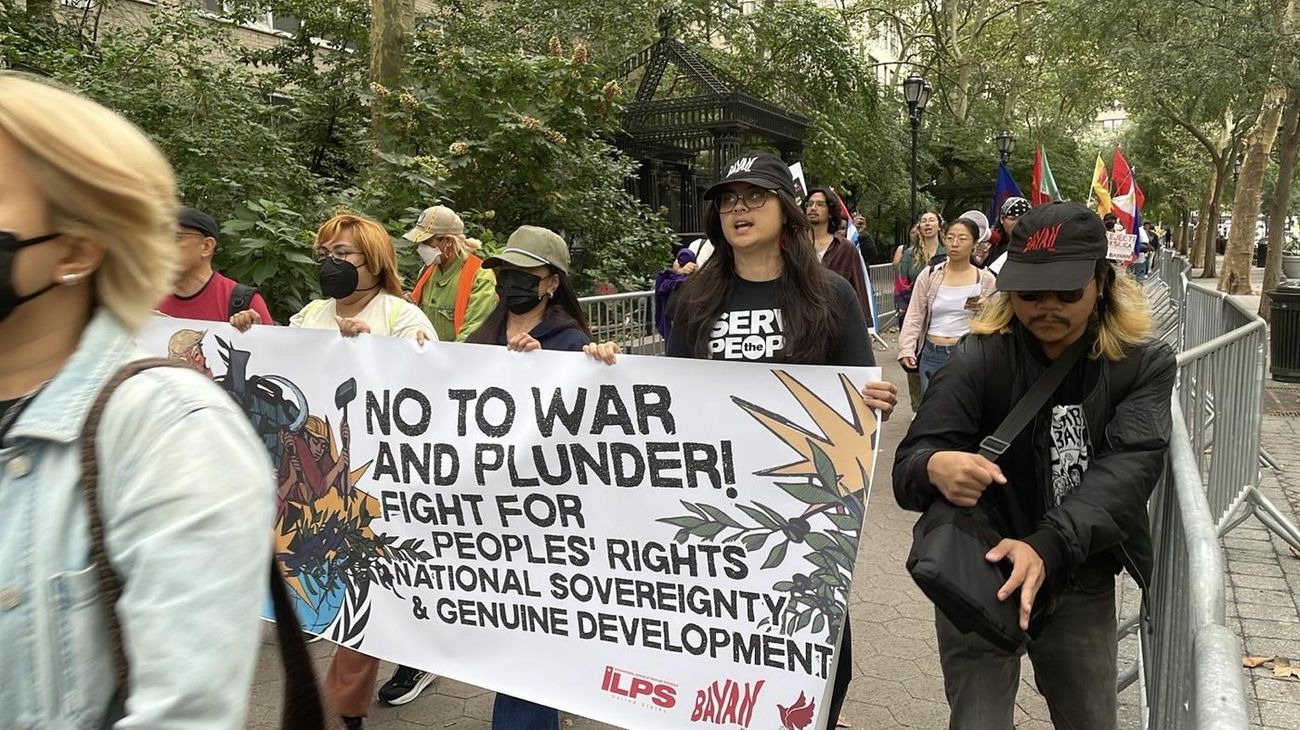
Pax Silica coalition. A Philippines-led coalition, marching under International League of Peoples’ Struggle and BAYAN USA banners, connected artificial-intelligence infrastructure, land and water rights, and opposition to foreign military and investment activity under a single “No to War and Plunder” banner, illustrating a resource-sovereignty and anti-war coalition frame distinct from the single-country cases above.
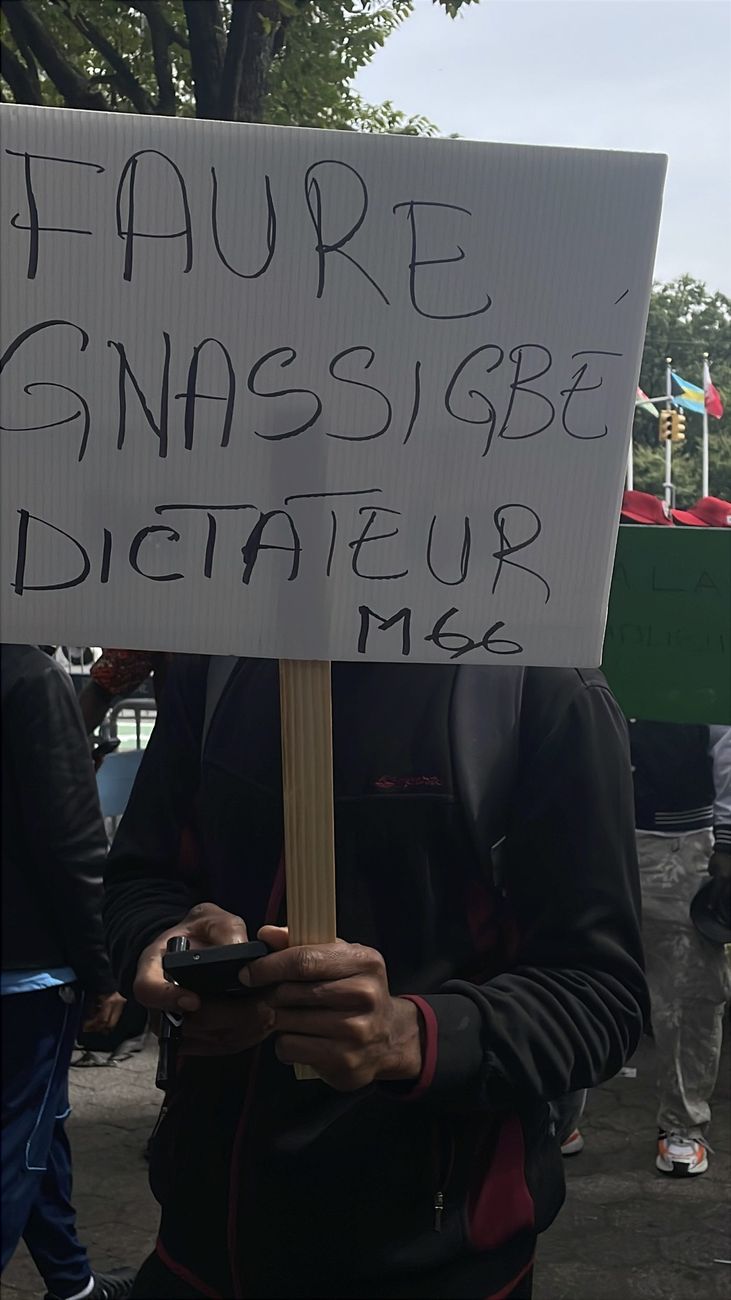
Isolated signage referencing other national leaderships, including a hand-lettered sign describing Togolese President Faure Gnassingbé as a “dictateur,” was also observed in the vicinity, underscoring how UNGA week concentrates a wide range of diaspora grievances into a small geographic footprint even where a full case was not developed in the underlying field notes.
“No More U.S.-U.N. Occupation in Haiti,” carried near a police barricade line.
Hindu Democratic Club of USA signage calling for minority rights and the release of Chinmay Prabhu.
North Korea-focused signage directed at the DPRK government and its UN standing.
Pax Silica coalition banner, marching under ILPS and BAYAN USA branding.
Isolated signage referencing Togolese President Faure Gnassingbé, observed in the surrounding area.
Field clip, Haiti sequence.
Field clip, Bangladesh sequence.
Section 6
Dispersal & Post-Protest Movement
Evidentiary Status
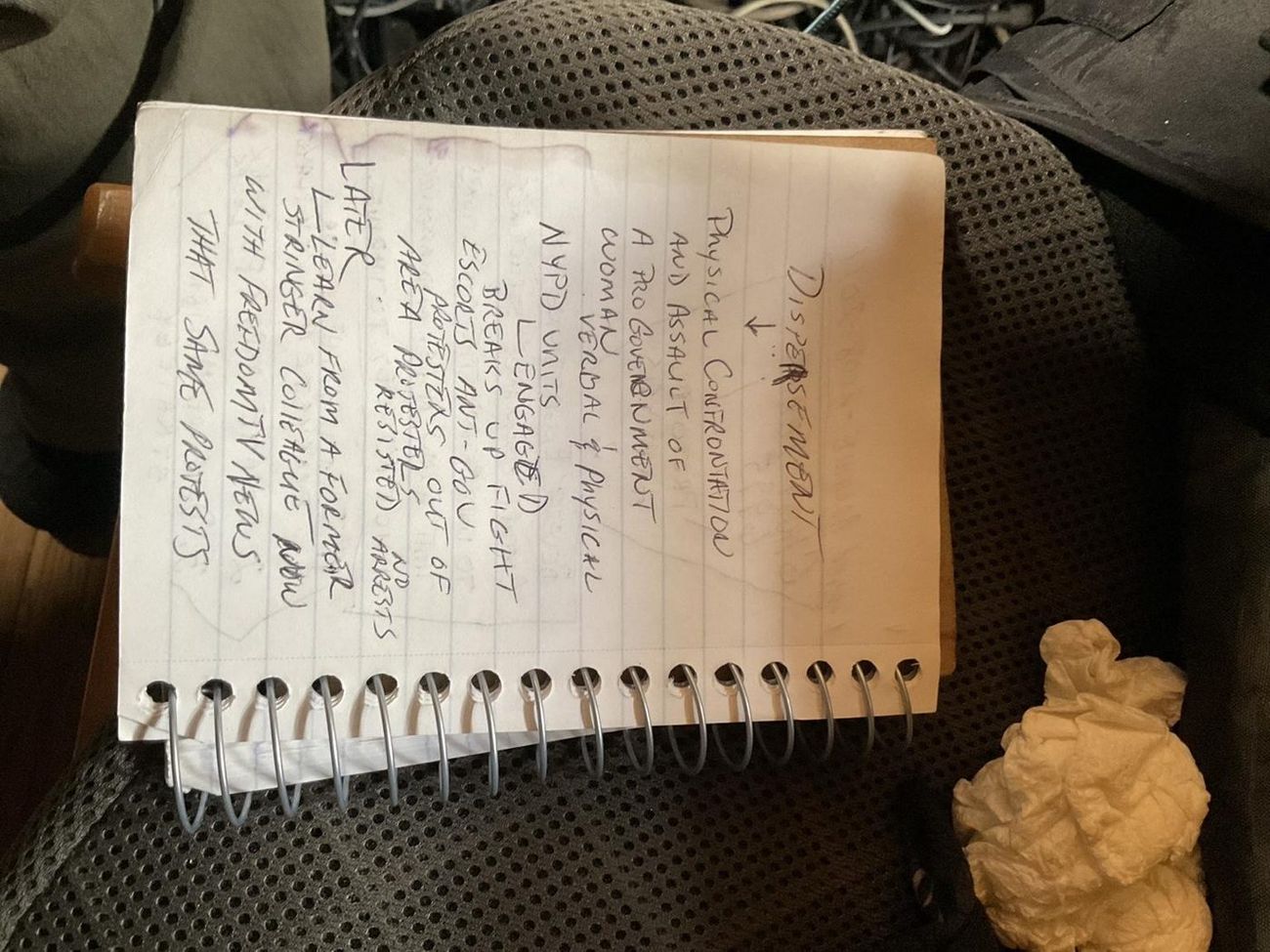
The following account is derived from contemporaneous handwritten field notes. It should be treated as field reporting unless independently corroborated by video, police records, or additional sources.
During the dispersal phase, field notes record a physical confrontation involving a pro-government woman. The note characterizes the encounter as both verbal and physical and records an assault allegation. This is retained as the analyst’s contemporaneous observation, not as a legal finding.
The notes record NYPD units engaging the incident, breaking up the confrontation, and escorting anti-government protesters out of the immediate area. Some protesters reportedly resisted the escort. No arrests were observed or recorded in the field note.
A later entry records that related Guinea protest activity subsequently merged or re-formed near the Waldorf Astoria in Midtown, identified in the note as the location of the Guinea UN delegation, with protesters engaging security personnel, pro-government supporters, and NYPD. A press contact described the later scene as chaotic and disruptive. The analyst’s contemporaneous assessment classified this later environment as high risk based on the preceding confrontation dynamics.
This account changes the end-state assessment of the Guinea sequence. The event should not be described only as elevated confrontation potential during dispersal: the field notes record an actual physical confrontation, followed by police intervention and removal. The later movement toward the Waldorf Astoria area also shows that dispersal from one location did not terminate mobilization; participants re-formed around a second, politically salient location.
Field Note Exhibit Contemporaneous note recording the dispersal-phase confrontation, NYPD intervention, and later re-formation of activity near the Waldorf Astoria.
Section 7
Public Order Classification
ARAC applies a four-phase operational continuum for public assemblies, drawn from a companion working paper: Passive Assembly, Expressive Friction, Dynamic Confrontation, and Violent Disorder / Riot.[2] The framework is used here as an interpretive aid to the field evidence, not as a substitute for direct observation.
Phase
Framework Indicators
Application to UNGA 81 Evidence
Passive Assembly
Low-density, open spacing, ambient discussion or periodic chants; personal identity remains primary.
Portions of the Liberia debate environment and lower-intensity assembly periods.
Expressive Friction
Shared group identity becomes more salient; directional clustering, banners, loud rhythmic chanting, and visible out-group orientation.
Early and mid-stage Guinea mobilization; some Liberia political argumentation.
Dynamic Confrontation
High in-group unity, directed verbal hostility, tightening ranks or crowd compression, and elevated interaction risk requiring differentiated intervention.
Guinea protest/counter-protest convergence, compressed movement space, heated verbal confrontation, and direct NYPD separation and containment.
Violent Disorder / Riot
Physical force becomes a shared norm and is accompanied by sustained destructive behavior such as attacks on people or property, barricades, projectile throwing, or similar disorder.
Not supported as an overall classification by the evidence reviewed. A physical confrontation occurred during dispersal, but the collected record does not establish sustained riot-level behavior.
Guinea classification. The Guinea sequence is best classified as progressing from Demonstration / Protest through Expressive Friction into Dynamic Confrontation.[2] Supporting evidence includes protest/counter-protest convergence, crowd compression in constrained urban space, directed verbal hostility, access interference, a substantial shift in NYPD posture toward direct separation, and the dispersal-phase physical confrontation recorded in contemporaneous notes. The available evidence does not support classifying the overall event as Violent Disorder / Riot, a phase reserved for sustained or generalized violent disorder. The sequence is therefore coded as: Demonstration / Protest → Expressive Friction → Dynamic Confrontation → Dispersal / Fragmentation / Re-formation.
Liberia classification. The observed Liberia debate is best classified within Passive Assembly to Expressive Friction.[2] Participants displayed animated disagreement and clear political contestation, but the recorded interaction remained primarily discursive. The footage does not show the crowd compression, opposing bloc convergence, targeted police separation, or sustained physical confrontation that would justify a Dynamic Confrontation classification.
Operational implication. Protest intensity, mobilization capacity, and violence risk are analytically distinct. Loud chanting, dense participation, coordinated apparel, or forceful rhetoric do not by themselves establish violent disorder. Interaction risk rises most clearly when hostile or mutually antagonistic groups converge in constrained space, available disengagement routes narrow, and police must shift from facilitation toward direct separation or extraction.
Section 8
Analytical Synthesis
The dispersal-phase field notes record that the Guinea sequence crossed from elevated interaction risk into an actual physical confrontation involving at least some participants. Under the applied public-order framework, this supports classifying the peak Guinea environment as Dynamic Confrontation rather than Violent Disorder / Riot.[2] NYPD intervention, escort and removal, and later re-formation around the Waldorf Astoria area indicate that the incident remained dynamic after the initial dispersal phase.
UNGA 81 functioned as a temporary transnational political convergence zone in which diaspora communities projected domestic grievances into an international diplomatic environment. The observed movements sought different relationships with international institutions: some sought external pressure and accountability, others opposed foreign intervention, and others emphasized sovereignty, minority rights, human rights, or resource control.
Guinea provides the clearest example of organized diaspora mobilization combined with counter-mobilization, Expressive Friction progressing into Dynamic Confrontation, and a measurable interaction-risk trajectory. The evidence does not establish sustained riot-level disorder. Liberia provides a useful comparative case in which political disagreement remained primarily within Passive Assembly to Expressive Friction and retained a discursive, civic character in the observed footage.
Across the week, the most useful early-warning variables were grievance persistence, message coherence, organizational continuity, counter-mobilization, digital amplification, cross-group proximity, police containment requirements, and shifts from performance grievances toward system-legitimacy grievances. The field material should be used as a qualitative indicator set, not as representative polling of national populations or diaspora communities as a whole.
Section 9
Suggested Event Coding Fields
The following coding schema was developed to standardize how future field material of this kind is logged, so that individual protest events can be compared systematically rather than described impressionistically.
Country / Issue
State or transnational issue concerned
Actor / Network
Visible organization, movement, or unidentified group
Grievance
Core complaint
Target
Government, leader, institution, foreign actor, or policy
Demand
Requested outcome
Legitimacy Frame
Performance, regime, sovereignty, rights, or resource
Message Coherence
Low / medium / high
Digital Amplification
Visible filming, livestreaming, hashtags, media capture
Observation / containment / separation / movement control
Risk Trajectory
Rising / stable / declining
Evidence Type
Video / photo / analyst note / combined
Confidence
Low / moderate / high
References
Sources & Citations
[1]Shakoor, M. N. (2026). M. Nuri Shakoor field notes from UNGA 81 protests. Unpublished contemporaneous field notes and evidence package, New York City.
[2]Operational Analysis of Public Assemblies, Crowd Psychology, Civil Unrest, and Strategic Public Order Frameworks. (2026). MNS Consulting-provided analytical reference.
[3]Shakoor, M. N. (2026). Covering & Monitoring High-Risk Political Events: An OODA Loop and Risk-Assessment Framework. ARAC International STRATCOM Frameworks. Read the framework →
About the Author
M. Nuri Shakoor, SRMP-R
M. Nuri Shakoor is a global security analyst and the founder of ARAC International Inc. He develops field-analysis and risk-assessment frameworks through MNS Consulting, applying structured analytic technique to conflict, governance, and civil unrest environments. He holds SRMP-R credentials and serves as an IEP Ambassador for the Institute for Economics and Peace.
Method & Affiliations
Analytical method and research infrastructure come through Quanta Analytica. Consulting practice and published field frameworks are issued through MNS Consulting. Institutional and practitioner exchange come through IOSI Global and INSSA, and development and risk-management capability through Lladner Business Solutions.
ARAC International is a 501(c)(3) nonprofit organization. Contributions fund peacebuilding advocacy, technical support to humanitarian partners, and education programmes advancing human rights worldwide.